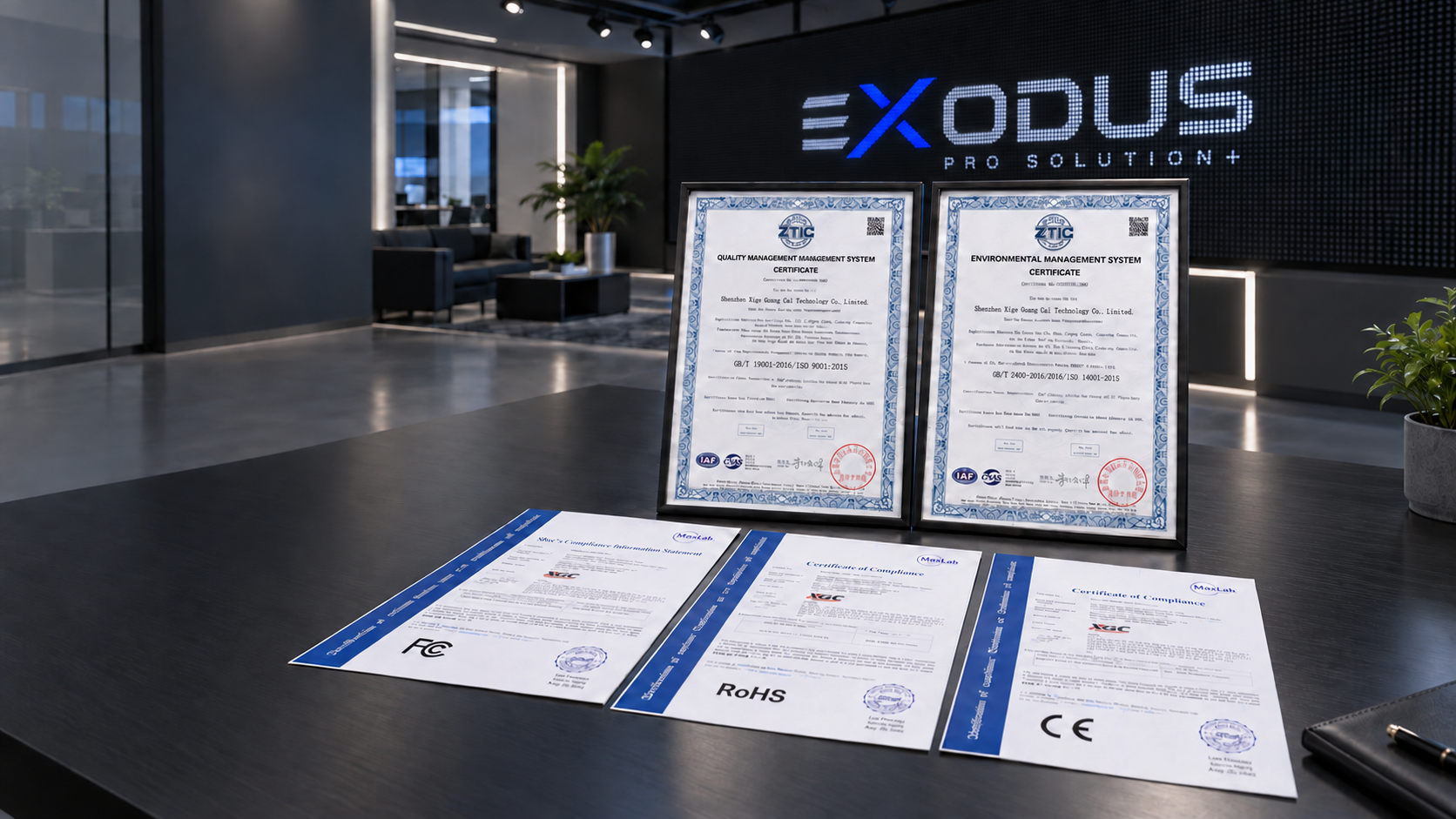
LED displays supported by ISO 9001, ISO 14001, FCC, RoHS, CE-LVD, and CE-EMC documentation provide greater confidence in several important areas. These include production quality, environmental management, hazardous-substance control, electrical safety, and electromagnetic compatibility.
Certificates are therefore more than supporting sales documents. They provide valuable information that helps customers select suitable products and allows contractors, designers, and project owners to evaluate LED display systems more systematically before installation.
LED Display Quality Standards and Certifications: Building Confidence in Every Installation
When choosing an LED display, buyers should consider more than pixel pitch, brightness, image quality, and price. The manufacturer’s certifications should also be reviewed because each certificate reflects a different aspect of production quality, electrical safety, electromagnetic compatibility, environmental management, and regulatory compliance.
XGC LED displays manufactured by Shenzhen Xing Guang Cai Technology Co., Ltd. are supported by several important certifications and compliance documents, including ISO 9001, ISO 14001, FCC, RoHS, CE-LVD, and CE-EMC. Together, these documents cover both the manufacturer’s management systems and the technical compliance of its LED display products.
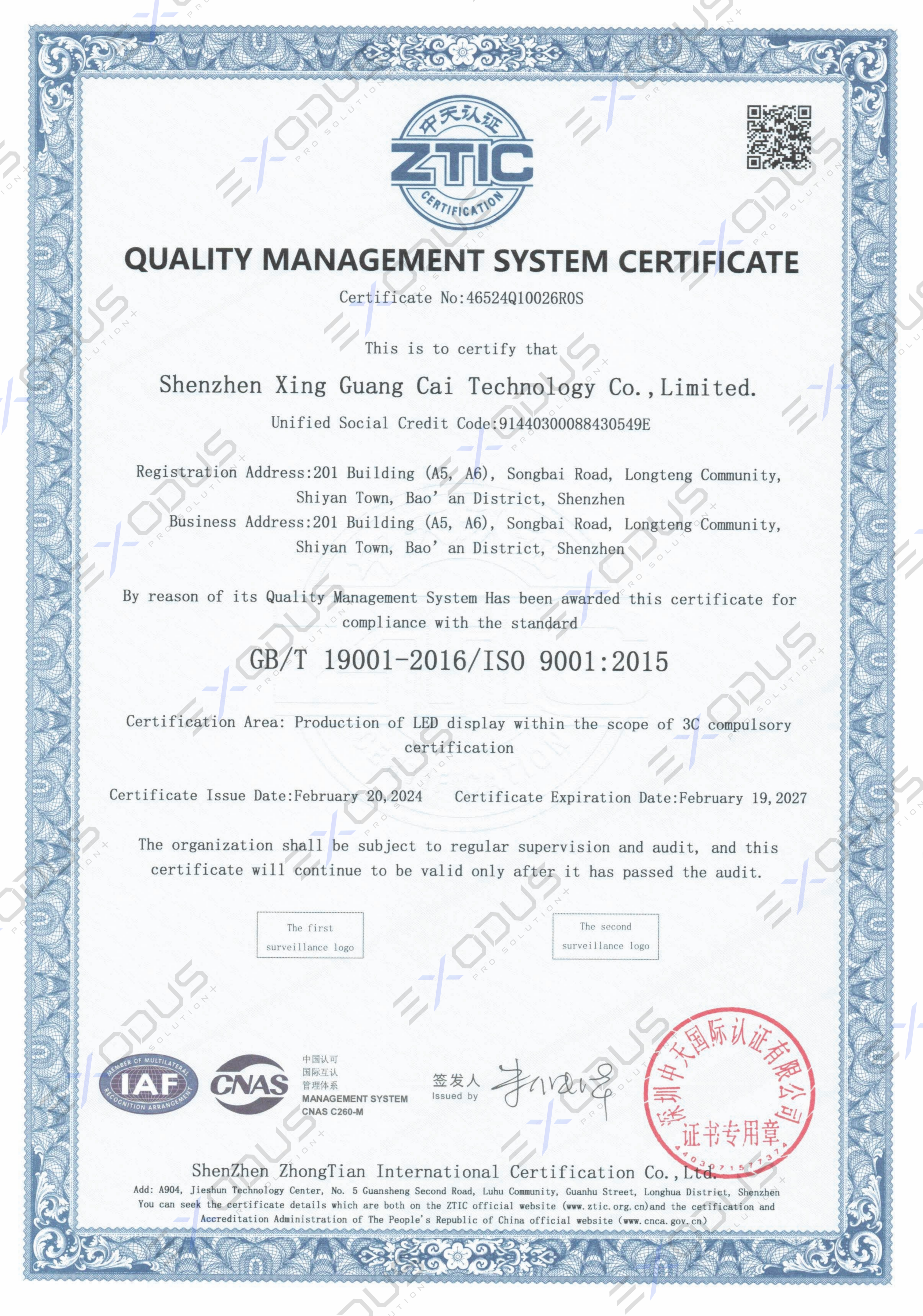
1. ISO 9001:2015 Quality Management System
ISO 9001:2015 is an internationally recognized standard for Quality Management Systems. It evaluates whether a manufacturer has clearly defined procedures for production control, quality inspection, problem resolution, and continuous improvement.
The certificate issued to Shenzhen Xing Guang Cai Technology Co., Ltd. covers the production of LED displays. It was issued on February 20, 2024, and states an expiration date of February 19, 2027, subject to regular surveillance and successful audits.
The benefits of ISO 9001 include:
-
Consistent control of raw materials and components
-
Standardized production and inspection procedures
-
Reduced manufacturing errors and product inconsistencies
-
Systematic handling of defects and customer feedback
-
Continuous improvement of product and service quality
For customers, ISO 9001 provides confidence that the manufacturer operates under a structured quality management system throughout its production process.
2. ISO 14001:2015 Environmental Management System
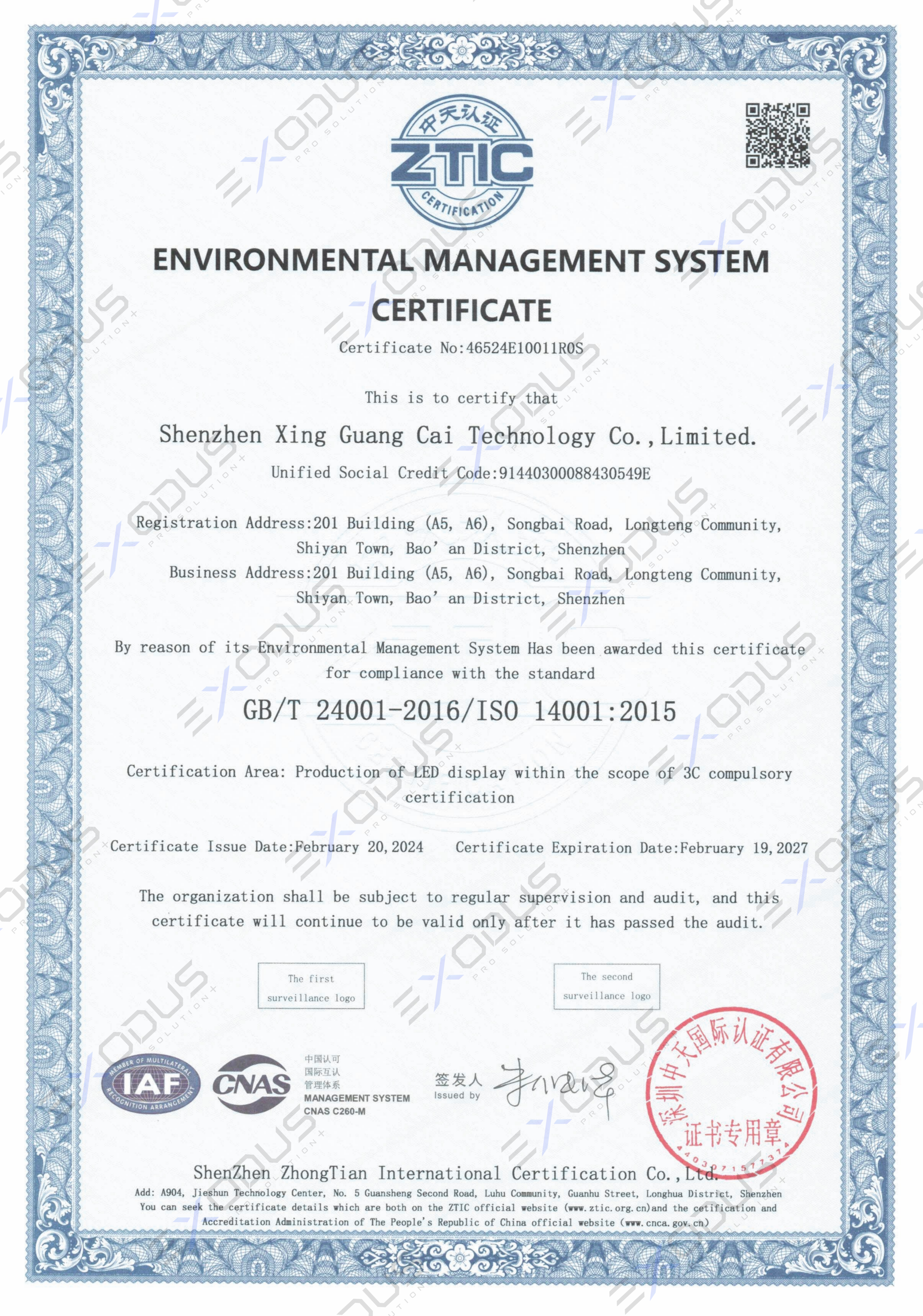
ISO 14001:2015 is an international standard for Environmental Management Systems. It focuses on how an organization identifies, controls, and reduces the environmental impact of its operations and manufacturing processes.
The certificate covers the production of LED displays by Shenzhen Xing Guang Cai Technology Co., Ltd. It was issued on February 20, 2024, and states an expiration date of February 19, 2027, subject to continued surveillance and audits.
ISO 14001 demonstrates attention to areas such as:
-
Reduction and proper management of production waste
-
Responsible handling of chemicals and electronic materials
-
Efficient use of energy and natural resources
-
Compliance with applicable environmental requirements
-
Reduction of environmental risks associated with manufacturing
This certification is especially valuable for companies and organizations with environmental, sustainable procurement, or corporate responsibility policies.
3. FCC Compliance for Electromagnetic Emissions
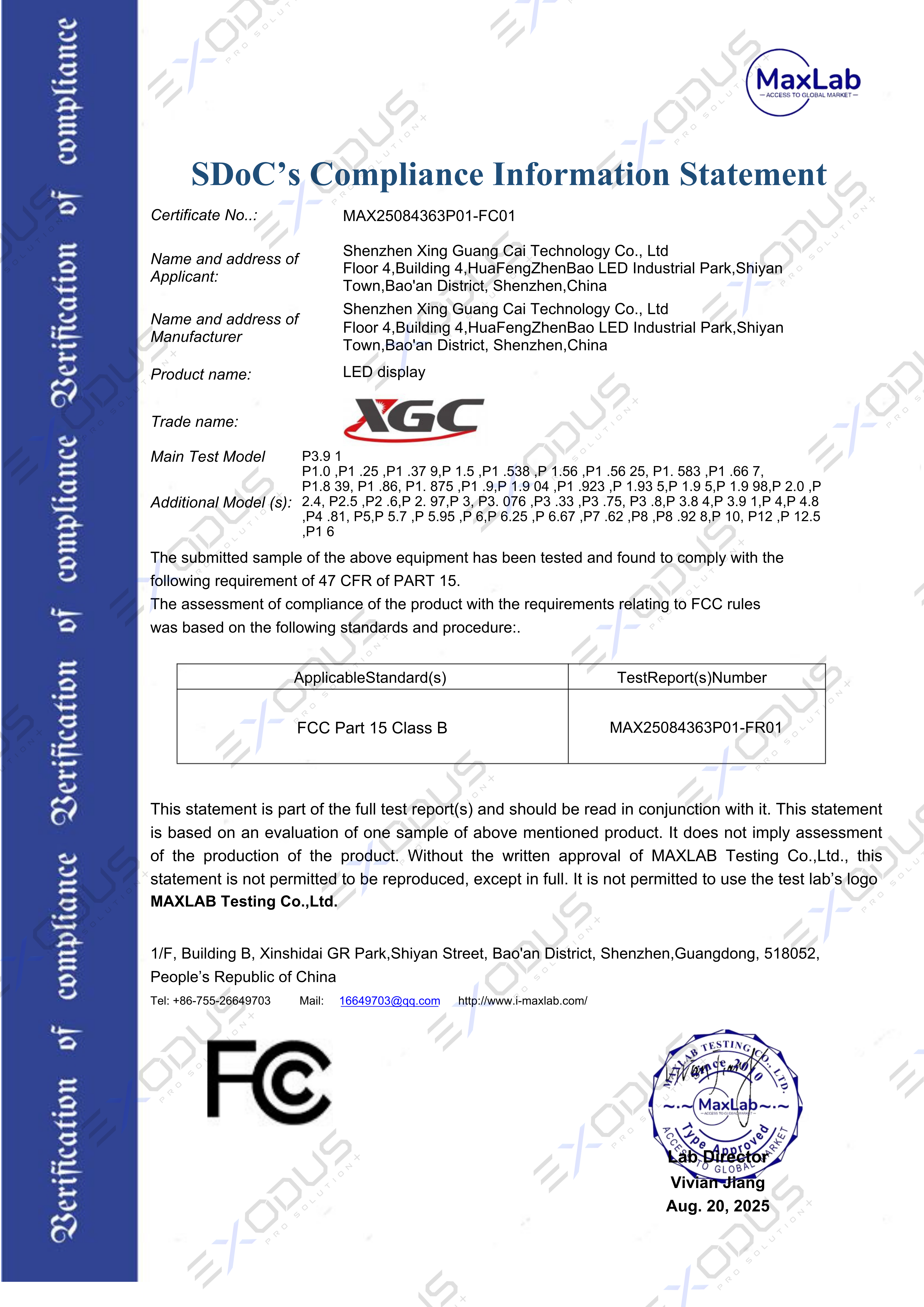
FCC requirements relate to the control of radio-frequency emissions and electromagnetic interference generated by electronic products, particularly products intended for use or sale in the United States.
The submitted samples of XGC LED displays were tested according to FCC Part 15 Class B requirements. These requirements are intended to control electromagnetic emissions from digital equipment and reduce potential interference with nearby communication and electronic devices.
The importance of FCC testing includes:
-
Controlling electromagnetic emissions from LED displays
-
Reducing interference with communication equipment
-
Supporting stable operation alongside other electronic systems
-
Demonstrating that the tested sample meets the applicable FCC requirements
FCC compliance is particularly relevant for LED displays installed in meeting rooms, studios, broadcast facilities, control rooms, offices, and other environments containing sensitive electronic equipment.
4. RoHS Compliance for Restricted Hazardous Substances
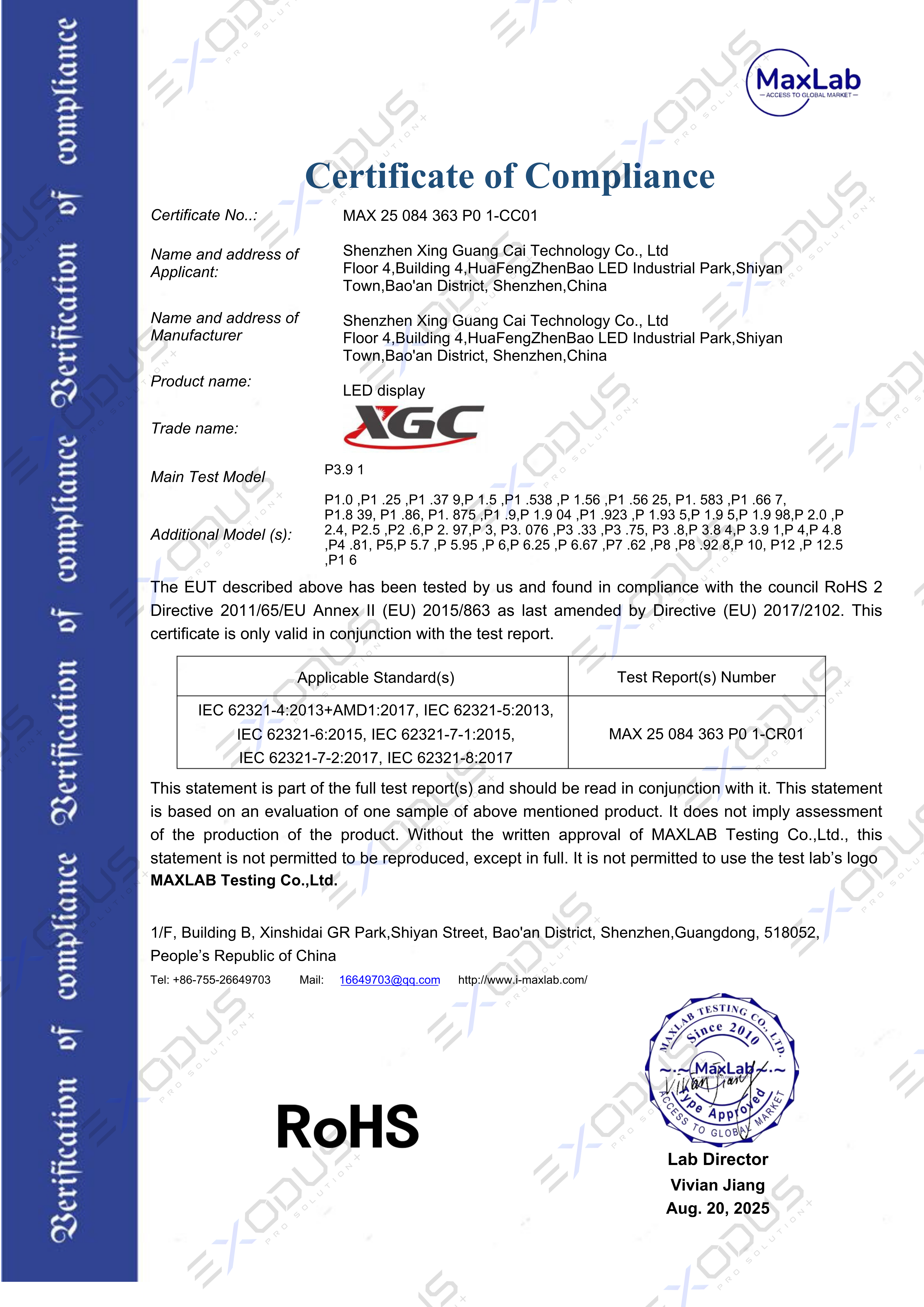
RoHS stands for Restriction of Hazardous Substances. It is a European Union requirement that limits the use of certain hazardous substances in electrical and electronic equipment.
The XGC LED display compliance document refers to RoHS Directive 2011/65/EU and the relevant amendments. Its purpose is to reduce the presence of substances that may be harmful to users, production workers, and the environment.
Restricted substances covered by RoHS include:
-
Lead
-
Mercury
-
Cadmium
-
Hexavalent chromium
-
Certain flame retardants
-
Certain phthalates
RoHS compliance indicates that the tested product and its relevant materials were evaluated against established limits for restricted substances. This supports safer product selection and more environmentally responsible procurement.
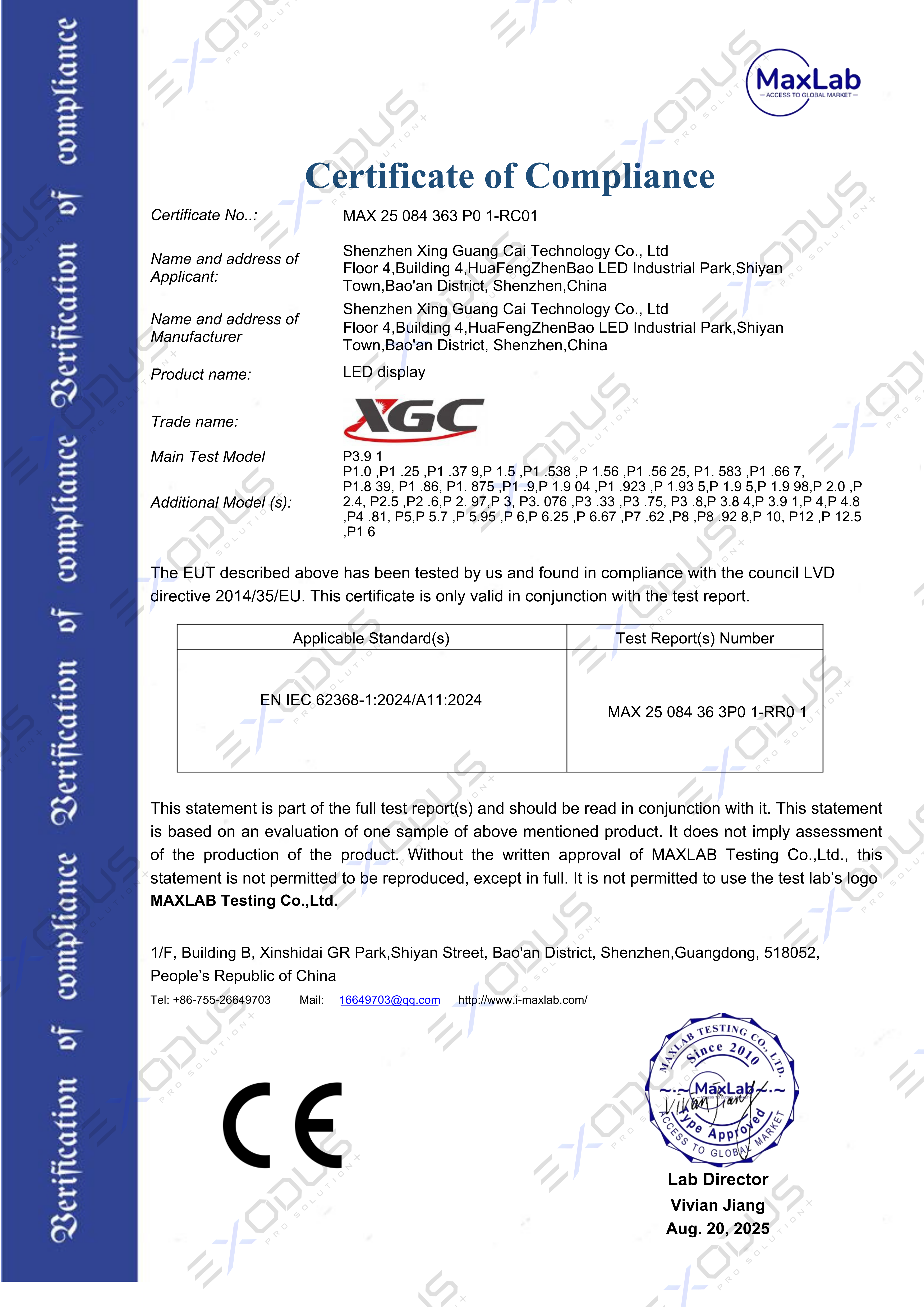
5. CE-LVD Electrical Safety Compliance
LVD stands for Low Voltage Directive and forms an important part of CE compliance for electrical products. The attached document refers to LVD Directive 2014/35/EU and the EN IEC 62368-1:2024/A11:2024 standard.
LVD assessment addresses potential electrical and safety risks, including:
-
Electric shock
-
Excessive operating temperatures
-
Fire hazards
-
Mechanical and structural safety
-
Electrical insulation and clearance distances
-
Protection from accessible live electrical parts
Electrical safety is particularly important for large LED displays because the system contains multiple power supplies, LED modules, receiving cards, control equipment, and power cables. Large displays may also operate continuously for extended periods.
However, the safety of a complete installation also depends on proper structural design, electrical load calculations, circuit protection, grounding, ventilation, cable selection, and professional installation.
6. CE-EMC Electromagnetic Compatibility
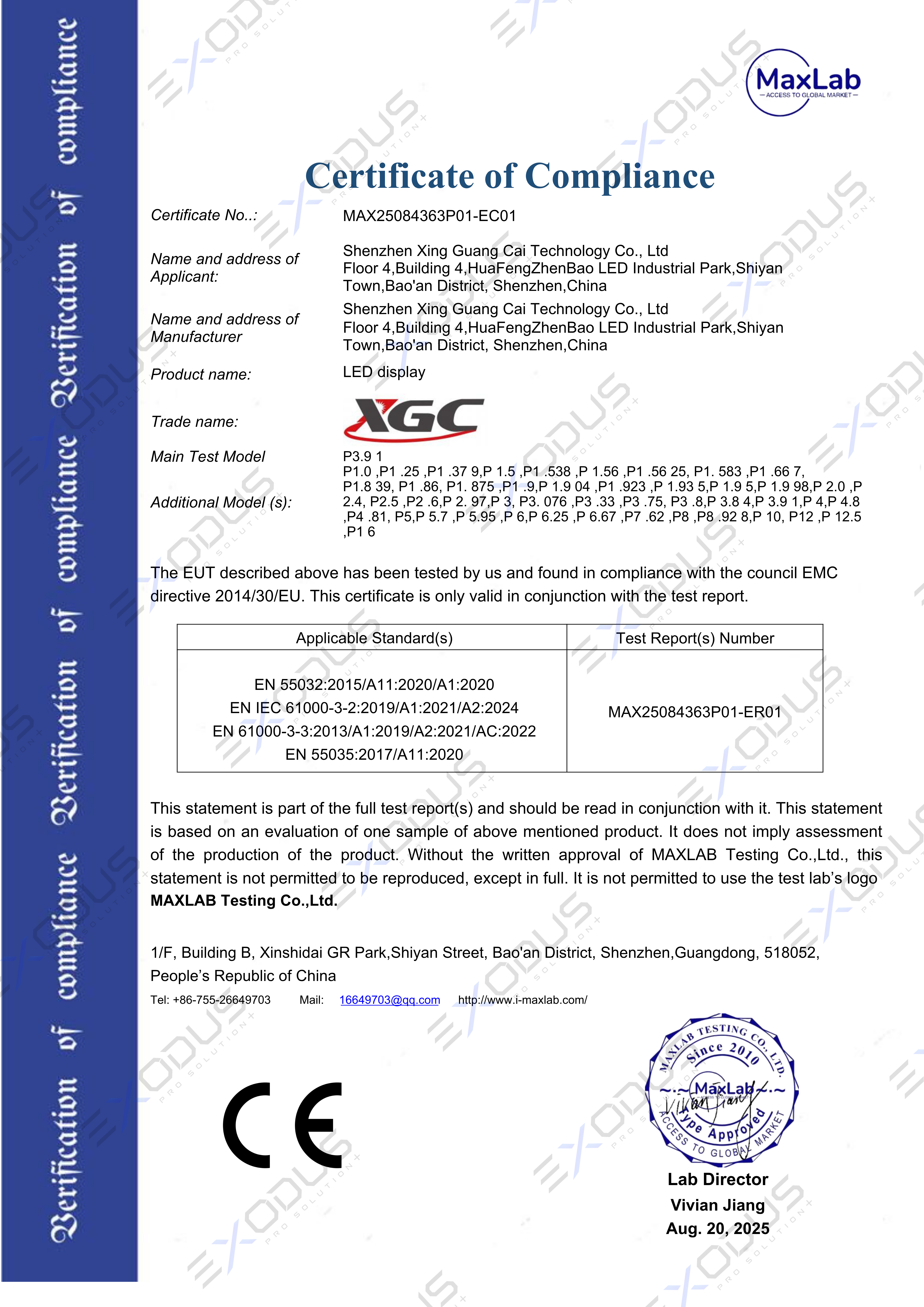
EMC stands for Electromagnetic Compatibility. It evaluates whether electronic equipment can operate correctly in its electromagnetic environment without generating excessive interference that may affect other equipment.
The CE-EMC document for XGC LED displays refers to EMC Directive 2014/30/EU and related standards, including EN 55032, EN 55035, and standards within the EN IEC 61000 series.
EMC assessment generally covers two primary areas:
-
The level of electromagnetic interference emitted by the product
-
The product’s ability to operate when exposed to external electromagnetic disturbances
The benefits of EMC compliance include:
-
Reduced interference with audio and video systems
-
Improved compatibility with networks and control equipment
-
More stable operation around other electronic devices
-
Suitability for meeting rooms, studios, control rooms, and event spaces
-
Support for projects requiring CE-related compliance documentation
How These Certificates Build Customer Confidence
The six certifications and compliance documents can be divided into two main groups.
Manufacturer Management Systems
-
ISO 9001:2015 covers quality management.
-
ISO 14001:2015 covers environmental management.
Product Compliance and Testing
-
FCC addresses electromagnetic emissions under United States requirements.
-
RoHS restricts hazardous substances in electrical and electronic equipment.
-
CE-LVD addresses electrical safety.
-
CE-EMC addresses electromagnetic compatibility.
Together, these documents demonstrate that the manufacturer has established management systems while its LED display products have also undergone assessments relating to safety, electromagnetic compatibility, emissions, and restricted substances.
They allow customers, contractors, consultants, and project owners to evaluate the product using more than price and basic technical specifications alone.
สนใจออกแบบและติดตั้งระบบจอ LED หรือ Pro-AV?
ทีมวิศวกรผู้เชี่ยวชาญจาก Exodus Pro Solution Plus ยินดีให้คำปรึกษา ออกแบบสเปก และประเมินราคาโครงการฟรี
ติดต่อปรึกษาทีมวิศวกร